Why Water Softener Installation is Essential for Southwest Florida Homes
Southwest Florida hard water damages pipes and appliances. Learn why water softener installation protects your home and saves you thousands in repairs.

Introduction
If you've lived in Southwest Florida for any length of time, you've probably noticed the white chalky buildup on your faucets, the cloudy spots on your glasses after they come out of the dishwasher, or the way your skin feels dry and tight after a shower. These aren't just minor annoyances—they're the visible signs of a much bigger problem happening inside your walls and behind your appliances.
Southwest Florida has some of the hardest water in the country. The water here contains exceptionally high concentrations of dissolved calcium and magnesium, minerals that naturally enter the groundwater as it flows through the limestone and mineral-rich soil that's common throughout the region . While hard water isn't a health risk, it is a major threat to your home's plumbing system and water-using appliances.
Many homeowners don't realize the extent of the damage until they're facing a costly water heater replacement or dealing with a slab leak that requires breaking through their concrete foundation. The truth is, hard water is quietly causing damage every single day—and a water softener is the most effective way to stop it.
In this guide, I'll explain why water softener installation is essential for Southwest Florida homes, how hard water damages your plumbing and appliances, and why making this investment now can save you thousands of dollars in the long run.
What Is Hard Water and Why Is It a Problem in Southwest Florida?
Hard water is simply water that contains elevated levels of dissolved minerals—primarily calcium and magnesium. These minerals are picked up naturally as water flows through underground limestone and dolomite formations .
How Hard Is Southwest Florida Water?
Southwest Florida relies heavily on groundwater drawn from the Floridan Aquifer, which has a naturally high mineral content . Homes across the region commonly test in the "hard" or "very hard" range . In fact, areas east of I-75 and along SR-70 often have the highest groundwater mineral levels .
Here's how the numbers break down:
-
The threshold for hardness: 7 grains per gallon (GPG) is where damage begins
-
Well water in the region: Can test at 15-25+ GPG—well into the "very hard" category
To put this in perspective, the Minnesota Department of Health recommends homeowners with water hardness above 7 GPG strongly consider water softening. Most of Florida is well above this threshold .
Why Is Hard Water Worse Here?
Several factors make Southwest Florida particularly prone to hard water problems:
Geology: The region sits atop limestone formations rich in calcium and magnesium .
Groundwater reliance: Municipal water in Sarasota and Bradenton is treated but doesn't remove hard-water minerals. Well water is drawn directly from the Floridan Aquifer—untreated—and can be significantly harder than even the hardest municipal supply .
Seasonal occupancy: Many homes sit empty during certain months, allowing hard water damage to accumulate quietly.
Humidity: The warm, humid climate accelerates chemical reactions between water, soil, and pipe materials .
How Hard Water Damages Your Plumbing and Appliances
Hard water doesn't cause damage overnight—it's a slow, cumulative process. But over time, the effects become increasingly serious and expensive to fix.
Pipe Scale Buildup and Restricted Water Flow
One of the most damaging effects of hard water is limescale buildup inside plumbing pipes . As mineral deposits accumulate, they reduce the internal diameter of pipes, restricting water flow and increasing pressure throughout the system.
Think of limescale in your plumbing like cholesterol in your arteries—the more there is, the harder your system has to work to function. Over time, this leads to:
-
Reduced water pressure: Water has to force its way through a smaller passage
-
Uneven flow at fixtures: Some fixtures may struggle while others work fine
-
Increased risk of leaks: Higher pressure stresses joints and connections
-
Slow drains and recurring clogs: Scale creates rough surfaces where debris catches
Water Heater Failure and Reduced Efficiency
Hard water is especially tough on water heaters. Mineral sediment settles at the bottom of the tank (or coats heating elements), forcing the system to work harder to heat water efficiently .
This has several consequences:
-
Increased energy bills: The water heater runs longer and works harder
-
Shortened hot water supply: Sediment takes up space in the tank
-
Premature equipment failure: Scale buildup is the #1 cause of premature water heater failure in Southwest Florida
Many homeowners hear popping or rumbling noises from their water heater—this is the sound of trapped steam bubbles trying to escape through sediment. That sound is a warning sign that your water heater is failing and needs attention .
Appliance Damage and Reduced Lifespan
Hard water impacts more than pipes. Dishwashers, washing machines, ice makers, and coffee makers suffer from mineral buildup that reduces efficiency and shortens their lifespan .
Common signs include:
Florida's water hardness means appliances typically last about 3 years less than the national average . Over a 10-year period, you could be replacing appliances much sooner than necessary—a cost that quickly adds up.
Corrosion and Hidden Leaks
Although hard water minerals don't directly corrode pipes, scale can create conditions that trap moisture and accelerate corrosion—especially in older plumbing systems . Over time, this can lead to pinhole leaks and water damage inside walls.
Slab Leaks
Slab leaks are a particularly serious problem in Florida homes. When pipes run beneath concrete foundations, hard water causes the copper pipes to corrode from the inside out. The leak saturates the soil beneath the foundation, causing it to shift and crack .
Warning signs include:
Slab leaks are expensive to repair. They require breaking through concrete, locating the leak, and then repairing or replacing the damaged pipes. Some homeowners pay thousands of dollars for slab leak repairs alone .
Personal Effects
Hard water affects more than just your plumbing. It also impacts your daily life:
-
Dry skin and brittle hair: Hard water minerals leave a film on your skin and hair
-
Difficulty lathering soap: Hard water prevents soap from forming a good lather
-
Stiff laundry and towels: Hard water leaves mineral deposits on fabrics
Why Installing a Water Softener Is the Solution
A water softener is the most effective way to protect your Southwest Florida home from hard water damage. Here's what a water softener actually does and why it's so effective.
How a Water Softener Works
A traditional water softener uses a process called ion exchange to physically remove calcium and magnesium from the water .
Here's the basic process:
-
Hard water enters the mineral tank containing resin beads charged with sodium ions
-
Ion exchange occurs: Calcium and magnesium ions (which carry a stronger positive charge) are attracted to the resin, displacing the sodium ions
-
Soft water flows to your home: The hardness-causing minerals have been removed
-
Regeneration: When the resin becomes saturated, the system flushes it with a salt solution, replenishing the sodium ions . This process typically occurs during low-usage periods like overnight
Modern water softeners are metered (demand-initiated) systems, meaning they track your water usage and regenerate only when needed. This is more efficient with salt and water than older timer-based systems that regenerate on a fixed schedule .
What a Water Softener Can and Cannot Do
What a water softener does:
-
Removes calcium and magnesium: The hardness-causing minerals are completely removed from the water supply
-
Prevents scale buildup: With minerals removed, scale stops forming
-
Improves soap performance: Soap lathers easily and rinses cleanly
-
Protects appliances and plumbing: Long-term protection from mineral damage
-
Reduces iron (up to moderate levels): Many salt-based softeners can handle up to 3-5 ppm of iron
What a water softener does NOT do:
-
Filter drinking water: A softener alone doesn't remove chlorine, sediment, or other contaminants
-
Remove iron at high levels: If you have high iron, you may need a dedicated iron filter
-
Improve taste and odor: Taste and odor concerns are better handled with filtration
Salt-Based vs. Salt-Free "Conditioners"
You may have seen products marketed as "salt-free water softeners." It's important to understand what these do—and don't do.
Salt-free systems are not softeners. They use various technologies to change the structure of minerals so they're less likely to form scale—but they do not remove calcium and magnesium from the water .
What salt-free conditioners can do:
What salt-free conditioners cannot do:
For Florida's extremely hard water—often 10-15+ GPG—salt-free conditioners typically aren't sufficient . If you want truly soft water with all its benefits, you need a traditional ion-exchange water softener .
Is a Water Softener Worth It in Florida?
Based on homeowner trends across Sarasota, Bradenton, and Lakewood Ranch, the answer is a resounding yes. Reasons include:
Most clients see a difference within the first week. Lakewood Ranch residents with newer construction homes especially notice faster improvements because plumbing lines are cleaner and more efficient .
Signs You Need a Water Softener
If you're experiencing any of these signs, hard water is likely the culprit :
-
White scale buildup on faucets, showerheads, or around drains
-
Cloudy glassware and spotting on dishes
-
Soap that doesn't lather well
-
Stiff, rough towels and laundry
-
Dry skin and brittle hair
-
Slow drains and recurring clogs
-
Low or fluctuating water pressure
-
Hot water running out faster than usual
-
Rising energy bills
-
Appliances breaking down sooner than expected
Choosing the Right Water Softener
Selecting the right system requires considering several factors specific to your household.
Capacity
System capacity is a primary consideration. Capacity typically appears in grains per gallon (GPG) . Average households require systems rated between 30,000-40,000 grains, depending on water hardness levels and usage patterns .
Your softener should be sized to handle your household's water consumption. Here's a quick reference:
| Household Size | Recommended System Capacity |
|---|---|
| 1-2 people | 24,000-30,000 grains |
| 3-4 people | 30,000-40,000 grains |
| 5+ people | 40,000-64,000 grains |
Features to Consider
-
Metered (demand-initiated): Regenerates based on actual usage—more efficient with salt and water
-
Water efficiency certifications: Minimizes waste during regeneration
-
Bypass valves: Allows untreated water for outdoor use or specific fixtures
Maintenance Requirements
Most systems last 10-15 years with proper maintenance :
Water softener salt comes in several forms—evaporated salt pellets contain fewer impurities and often result in more efficient operation with less maintenance .
Professional Installation vs. DIY
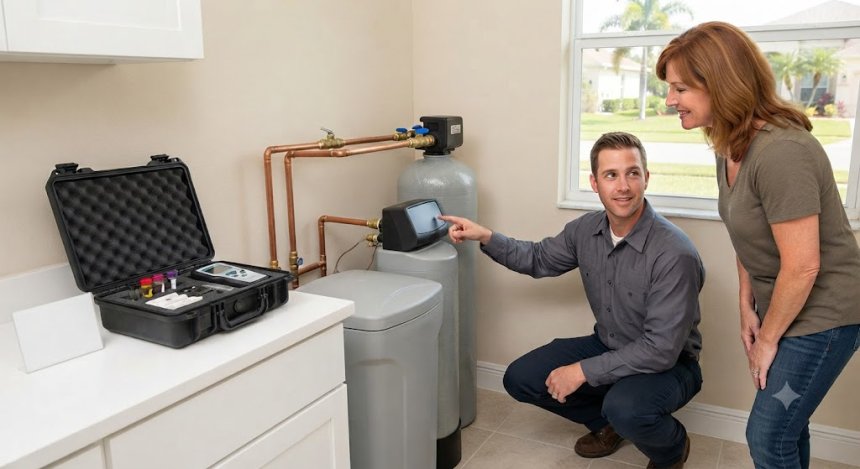
Professional installation ensures your system integrates properly with your home's plumbing and is set up for optimal performance . The process typically involves connecting the unit to your main water line before it branches to individual fixtures, allowing whole-house treatment .
Installation considerations include:
-
Available space
-
Proximity to main water lines
-
Drainage requirements
-
Water hardness level
-
Household size
Common Concerns About Water Softeners
"Will softened water taste salty?"
No. The amount of sodium added during softening is quite small—typically 20-30 mg per 8-ounce glass for moderately hard water. For comparison, a slice of bread contains 100-200 mg of sodium .
If sodium is a concern (for medical reasons), you can use potassium chloride instead of sodium chloride in your softener. The process works the same way, but potassium is added instead of sodium .
"Is softened water safe to drink?"
Yes, for most people. The sodium levels are well below anything that would cause health concerns for healthy adults .
However, if you're on a severely sodium-restricted diet, you may want to:
-
Install a reverse osmosis system for drinking water (which removes the sodium)
-
Have an unsoftened tap at the kitchen sink for drinking and cooking
"What about the environmental impact?"
Water softeners do produce a brine waste stream during regeneration that contains salt and the removed minerals .
Modern high-efficiency softeners use significantly less salt and water than older models. Metered (demand-initiated) softeners only regenerate when needed, rather than on a fixed schedule, further reducing waste .
"Will soft water feel 'slimy'?"
Some people initially describe soft water as feeling "slippery" or "slick." This is actually the absence of mineral residue—your soap is rinsing away completely rather than leaving film on your skin .
Most people adjust quickly and come to prefer the clean feeling of soft water. Your skin and hair will actually feel better once you're not coating them with soap scum every time you shower .
Why Choose Us for Water Softener Installation in Naples
At Incas Plumbing, we understand the unique challenges of hard water in Southwest Florida. We've been helping homeowners protect their plumbing and appliances for years.
We offer:
-
Licensed, insured plumbers: Professional installation you can trust
-
Honest recommendations: We'll help you choose the right system for your home
-
Upfront estimates: Know the cost before we start
-
Quality equipment: Systems built for Florida's hard water conditions
-
Ongoing maintenance support: We're here to keep your system running efficiently
-
Local expertise: We understand the specific water conditions in Naples and surrounding areas
We also provide related services to keep your plumbing system in top condition:
-
Pipe descaling and cleaning
-
Water heater maintenance and repair
-
Leak detection and repair
-
Trenchless pipe replacement
-
Whole-home water filtration