Minimizing Interior Water Damage After a Plumbing Rupture
Learn professional strategies to minimize water damage after a sudden plumbing rupture, safeguard your Naples home, and prevent mold growth.


Immediate Isolation: Stopping the Hydraulic Source
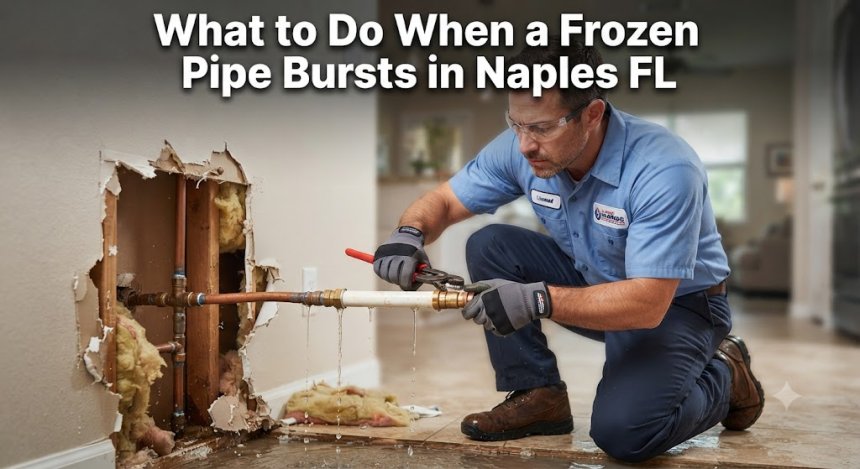
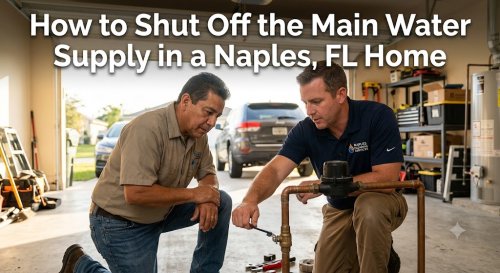
When a sudden plumbing rupture occurs in a Southwest Florida residence—whether from an unseated supply line under a kitchen sink or an overhead PEX fitting failure in a 130°F attic—every second dictates the volume of structural saturation. The primary hydraulic imperative is immediate source isolation. Every property manager, snowbird, and homeowner in Naples must know the exact location of their main water shutoff valve. In slab-on-grade single-family homes, this is typically housed in an exterior utility box near the front property line or adjacent to the hose bib, requiring a pentagon meter key or a channel-lock plier to actuate. In condominiums, the isolation valve is often located in a common hallway chase, utility closet, or directly downstream of the unit's water meter bank.
Once the main valve is closed, you must relieve residual line pressure by opening the lowest-elevation plumbing fixtures in the structure, such as exterior hose spigots or ground-floor bathtubs. This stops the continuous siphon effect and drains standing water trapped within the vertical risers. For seasonal or vacant properties, installing an automatic whole-home water shutoff valve equipped with point-of-use acoustic leak sensors provides automated physical isolation within seconds of an abnormal continuous flow event, mitigating catastrophic interior flooding before physical intervention is possible.
Electrical and Structural Hazard Mitigation
Water intrusion immediately introduces severe secondary hazards that require rapid evaluation before any remediation can begin. Water is an exceptional conductor of electricity; a pressurized rupture that sprays drywall or structural cavities can easily bridge live circuits in wall outlets, baseboard heaters, or kitchen appliance connections.
- Electrical Isolation: If standing water approaches floor-level receptacles, appliance cords, or your main electrical panel, immediately shut off the corresponding breakers at the service panel, provided you can reach it safely without stepping in water. If the panel itself is compromised or wet, contact your electrical utility provider to drop the service drop.
- Drywall and Insulation Collapse: In Southwest Florida's standard frame-and-stucco or CBS (Concrete Block and Stucco) construction, water quickly saturates blown-in attic insulation or fiberglass batt insulation inside interior partitions. Wet insulation adds immense dead load to ceilings and walls, frequently triggering sudden structural collapse of drywall assemblies.
- HVAC Duct Contamination: If a pipe bursts near ceiling return vents or air handler plenums, turn off your HVAC thermostat immediately. Pulling moist air and atomized water through ductwork distributes moisture throughout the entire conditioned space, rapidly seeding mold growth across internal foil-backed or fiberglass duct liners.
Systematic Moisture Extraction and Environmental Control
Once the water source is secured and safety hazards are cleared, moisture management becomes a race against time and humidity. Southwest Florida’s ambient atmospheric moisture creates an ideal environment for secondary structural damage and microbial amplification (specifically Aspergillus and Penicillium colonies) within 24 to 48 hours of wetting.
- Standing Water Removal: Extract pooling water immediately using commercial wet-dry vacuums, submersible trash pumps, or weighted extraction tools. Do not rely solely on evaporation.
- Baseboard and Cavity Venting: Remove baseboards and drill strategic weeping holes in drywall partition bottoms (approximately two inches above the floorplate) to allow trapped wall cavity moisture to vent before studs rot or mold establishes.
- Climate Dehumidification: Close all exterior doors and windows to isolate the indoor environment from high outdoor humidity. Deploy commercial low-grain-refrigerant (LGR) dehumidifiers and high-velocity air movers to force bound moisture out of concrete slabs, subflooring, and framing lumber.
Diagnostic Tracing and Evaluating Repair Scopes
After stabilizing the immediate environment, structural and plumbing assessments must determine the root cause of the failure and outline the necessary restorative scope. The table below outlines common sudden rupture triggers, their diagnostic indicators, and standard remediation pathways.
| Rupture Location | Primary Failure Mechanism | Diagnostic Indicator | Standard Repair Scope |
|---|---|---|---|
| Under-Slab Copper | Electrochemical pinhole corrosion from acidic soil or aggressive hard water | Unexplained meter dial movement, warm spot on tile floor, drop in system pressure | Acoustic leak isolation, spot slab excavation, or overhead PEX-A pipe abandonment and reroute |
| Attic PEX / CPVC | UV degradation, thermal embrittlement, or improper crimp ring installation | Ceiling stain, drywall sagging, sudden water pressure loss | Sectional pipe replacement, crimp verification, or comprehensive overhead repipe |
| Water Heater Tank | Glass-lining thermal fatigue, galvanic scale bridging, or tank bottom corrosion | Flooded utility platform, pooling at base, lack of hot water | Tank replacement, thermal expansion tank installation, and dielectric union upgrade |
| Condo Vertical Stack | Cast iron pipe wall tuberculation, root intrusion, or structural settling | Multi-floor drain backup, sewage overflow from lowest fixture (ground floor/tub) | Video scope inspection, hydro jetting, or sectional cast iron replacement / structural lining |
Trade Insights and Overlooked Details
Property owners frequently fall into common diagnostic traps following a sudden plumbing failure. Recognizing these overlooked mechanical details prevents compounding property damage:
- The Patch Fallacy: Repairing a single localized pinhole leak on an aging copper line embedded in a concrete slab often induces immediate failure nearby. The surrounding pipe wall has likely suffered identical electrochemical thinning; whole-system overhead rerouting is frequently the only permanent engineering solution.
- Chloramine and Elastomers: Municipal water supplies utilizing chloramine for disinfection accelerate the degradation of rubber flappers, supply line washers, and washing machine hoses. Inspecting these braided stainless steel or rubber supply lines annually prevents catastrophic hose blowouts while properties are vacant.
- Condo Stack Jurisdictions: In high-rise and multi-family condominiums, determining whether the rupture occurred on a shared vertical stack (common element, HOA responsibility) or an individual branch line (owner responsibility) is critical before authorizing invasive structural demolition.
Frequently Asked Questions
Should I keep my air conditioning running during a major indoor water leak?
If the leak is isolated to a distant room and the air handler or ductwork is completely uncompromised, keeping the air conditioner running at a low fan setting helps remove ambient moisture. However, if water has contacted the air handler, return plenums, or duct insulation, shut the system off immediately to prevent circulating mold spores and humidity throughout the structure.
How can I verify if my water meter is still registering flow after shutting off interior valves?
Locate your municipal water meter outside, remove the protective access lid, and observe the low-flow indicator triangle or sweep hand. If the small red or blue indicator wheel is spinning while all indoor fixtures, irrigation systems, and pool auto-fills are manually closed, it confirms an active, pressurized supply leak between the meter and the structure—or an unseated main isolation valve.
Is it safe to use chemical drain openers on a backup caused by a pipe rupture?
Never use caustic chemical drain openers when dealing with structural pipe ruptures, partial collapses, or severe backups. Chemical drain cleaners sit in stagnant water, creating severe thermal reactions that melt PVC pipes, weaken older cast iron, and release toxic fumes or splashing acid hazards when technicians attempt mechanical cabling or hydro jetting.
What makes Southwest Florida concrete slabs particularly vulnerable to plumbing failures?
Collier County's native soil composition, combined with aggressive limestone-derived hard water and acidic water chemistry, creates a corrosive exterior environment for copper tubing laid directly in or under monolithic concrete slabs. Soil shifting during heavy tropical weather further stresses rigid metallic piping, leading to premature structural fatigue and pinhole formation.
When is an overhead repipe recommended over fixing a single underground slab leak?
An overhead PEX-A repipe is recommended when a copper plumbing system exceeds 25 to 30 years of age, has experienced multiple distinct pinhole leaks, or shows widespread wall-thinning during diagnostic testing. Patching individual slab leaks on aging systems is often a temporary fix, whereas routing new supply lines through the attic abandons compromised sub-slab piping permanently.